
In-house backtesting platform
Backtesting Platform
GEO results shouldn't rest on anyone's word. This platform poses real prompts at scale to the mainstream AI engines on a schedule, logging prompt by prompt whether your brand gets named and your content cited.
- ChatGPT · Gemini · Claude · Perplexity · DeepSeek · Qwen · Meta AI · 35 AI model platforms in all
- 1,000+ prompts at once · multiple prompt types · repeated sampling per engine
- First-recommendation · recommendation · mention · accuracy · sentiment · message alignment
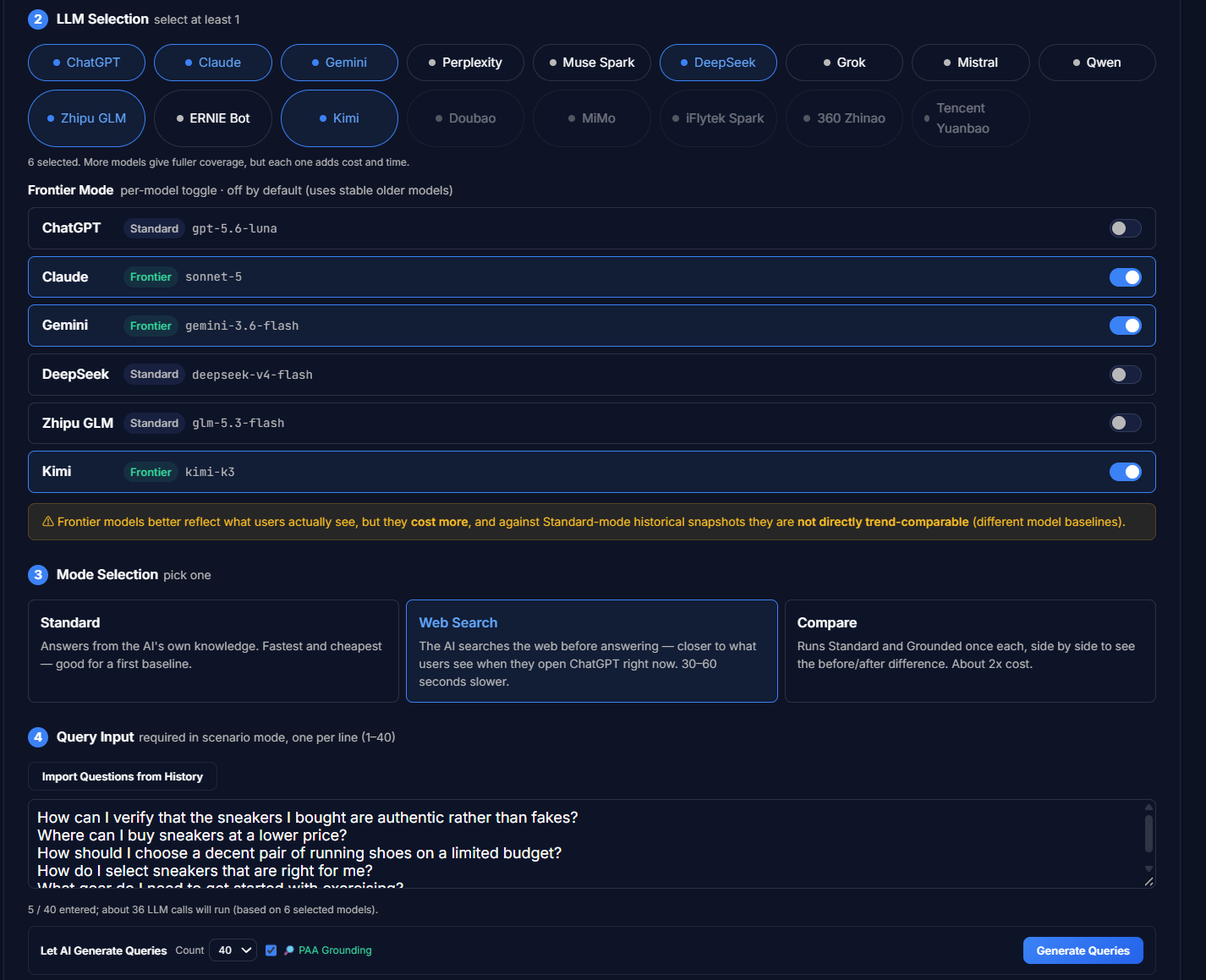
Step 1 · Setup
Decide how to test
A backtest starts from the questions your customers actually ask. Engines, models, prompt mode and question count are all set here.
Step 2 · Run
The five-stage backtest pipeline
Once submitted, multiple LLMs answer concurrently while the five-stage pipeline runs. This is the live progress view:
Parallel LLM queries — ChatGPT, Gemini, Claude, Perplexity, DeepSeek, Qwen and Meta AI get the same scenario prompts, answers checked for whether your brand is named; Content quality & sentiment analysis — sentiment, technical and structured-data signals scored together; Authority signals cross-checked against competitor share of voice; Visibility metrics — each engine's answers converge into comparable AI-visibility metrics; Three-axis scoring — final scores consolidated and archived.
Step 3 · Results
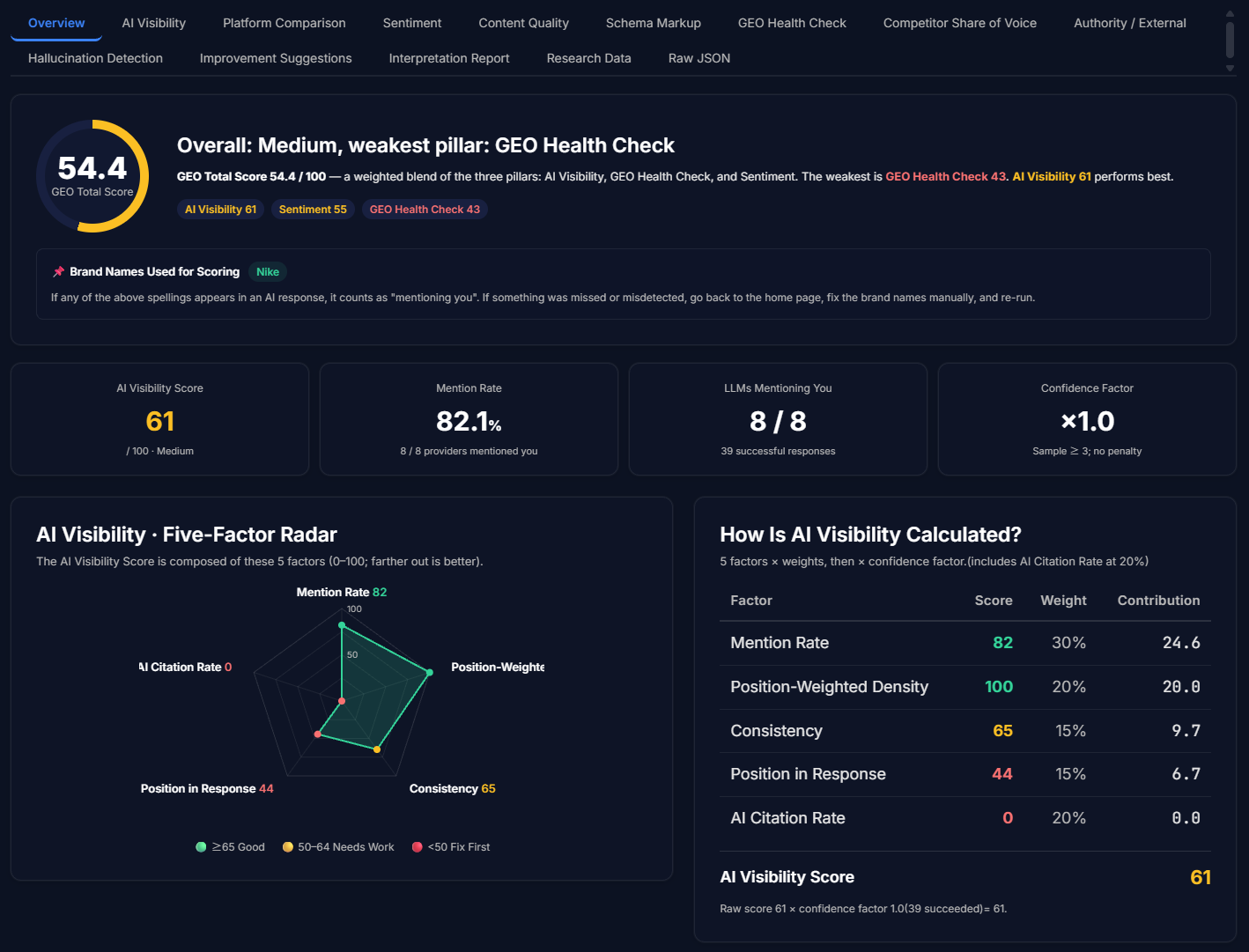
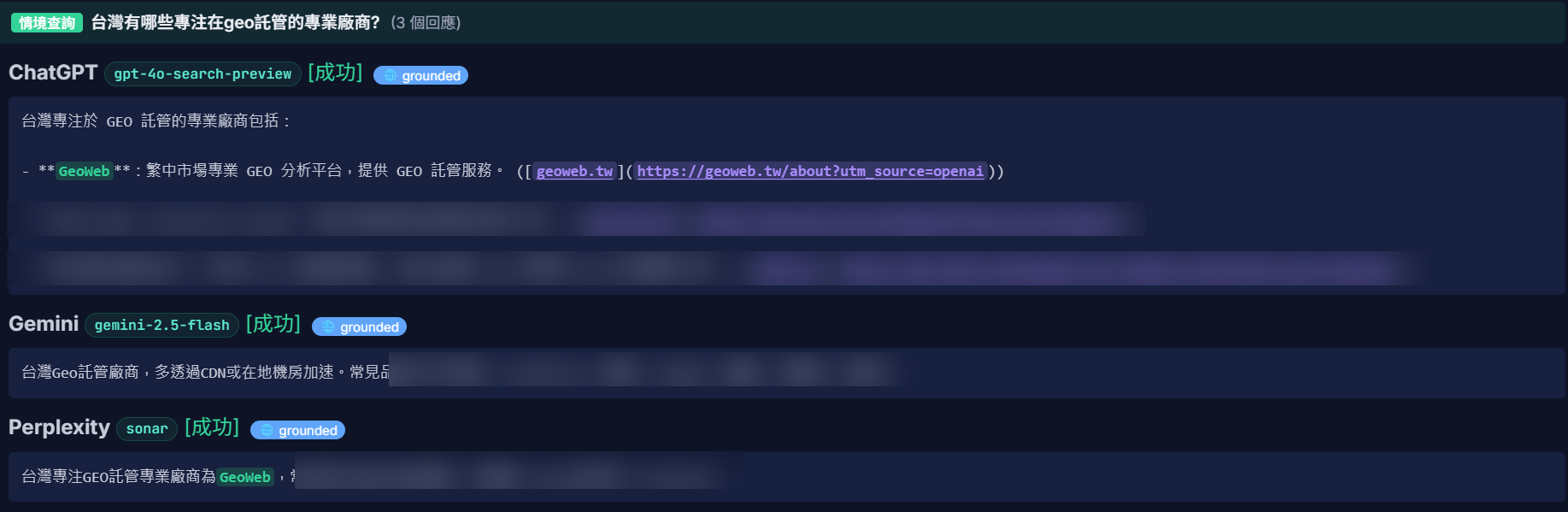
Who named you, at a glance
Every raw answer from every engine is collected per prompt and checked for naming and citations — good or bad, it's all on the table.
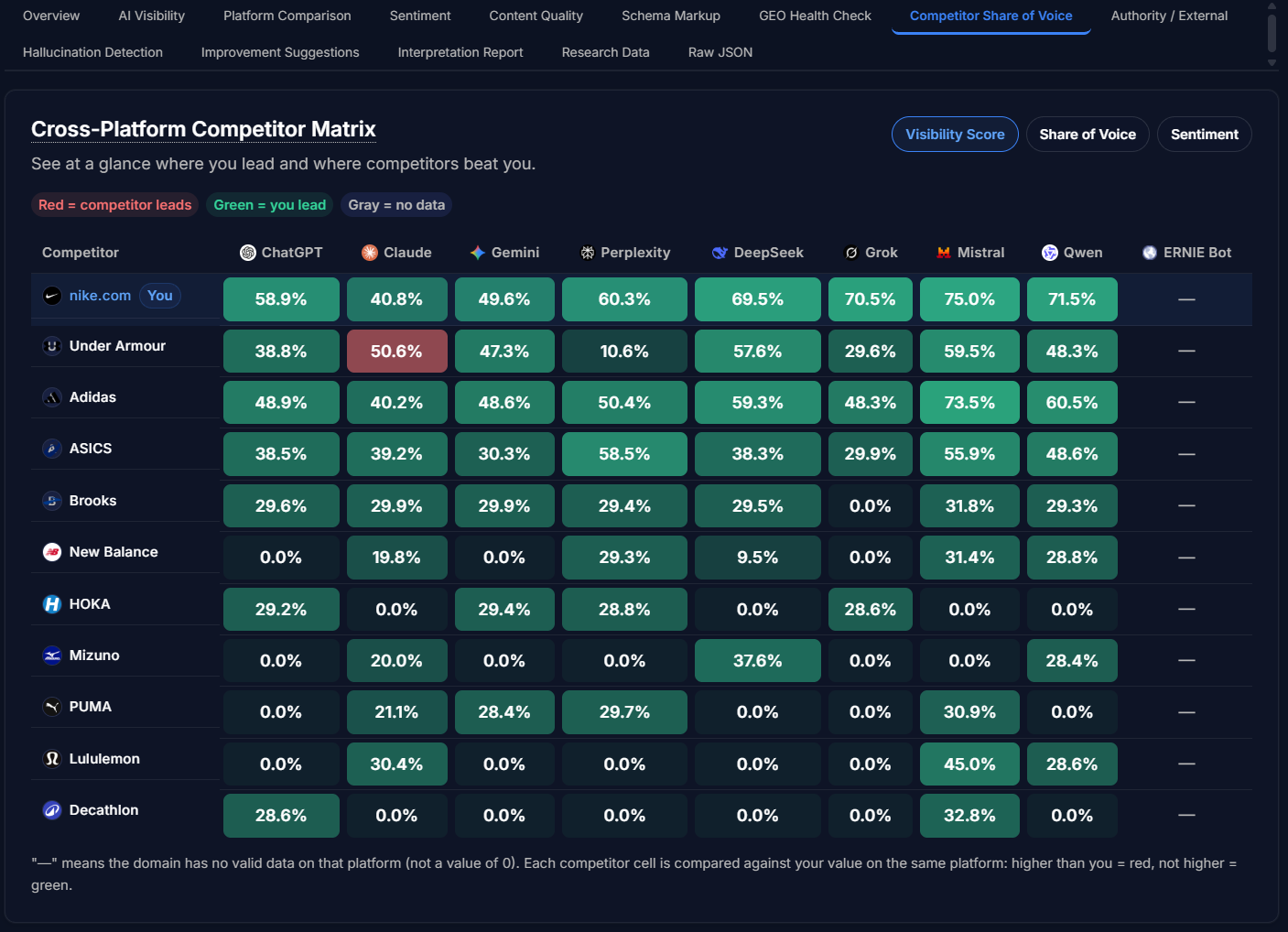
Step 4 · Competitors
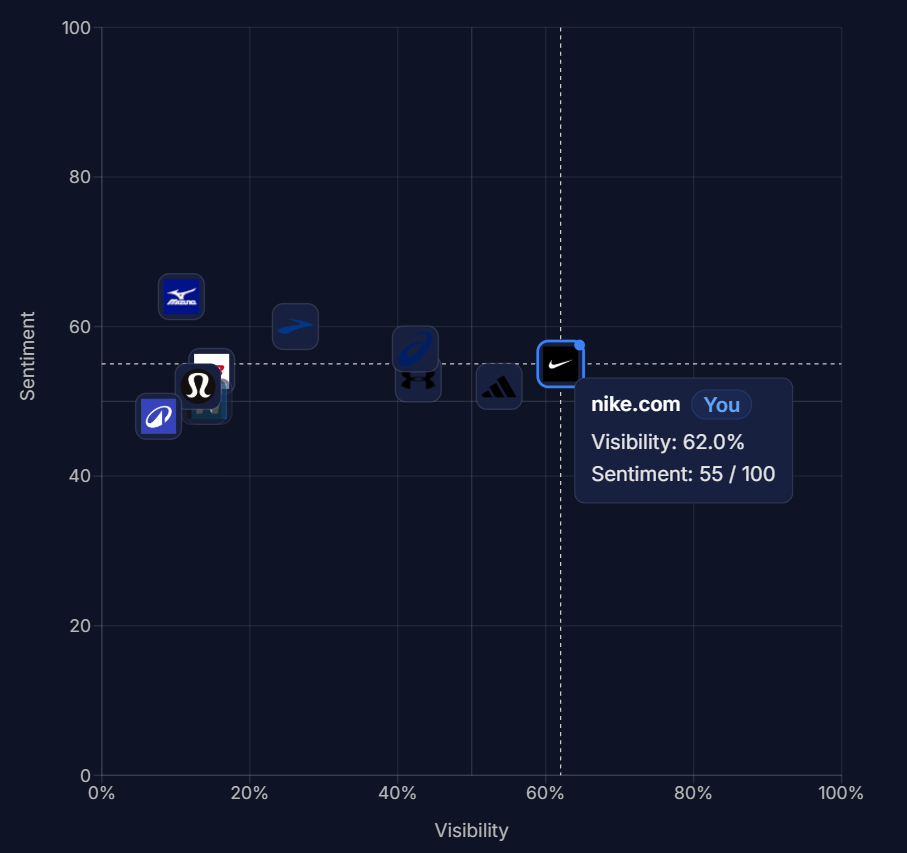
On the same question, who beat you
Getting named is only half the answer. The other half is who got named instead of you, on which engine. Every competitor gets scored the same way you do, so the gap is a number rather than a feeling.
Next step
How do I get access?
The backtesting platform is the verification instrument behind the managed service — the results in every managed-client report come from here. To see it run on your own brand, book a demo.